Black Bull
Museum
A decentralized museum preserving the Black Bull through fine art and curated meme art — one sketch, one edition, at a time.
Art preserves moments that history forgets.
Memes preserve the moments the internet won't let go of.
Curate memes
Selecting and licensing meme art from real artists, made into fine art editions.
Preserve
Building a permanent, public archive that nothing quietly deletes.
Pay meme artists
Every meme we curate is licensed and paid for — nothing used without permission.
Transform speculation
Turning attention into patronage — collectors as stewards, not traders.
This is the kind of piece the museum curates — internet culture, rendered with the weight of fine art.
Why this, and why now.
Ansem has built something rare: a genuine movement gathered around a single figure, the black bull. That kind of attention is hard to create and easy to waste. I want to help redirect some of it toward something that lasts — fine art built around the same symbol, made by real artists, held by the people who showed up early.
I'm leading by example. I'm an established artist with a background in art curation, and I'm starting by sketching live on pump.fun, in the open, the same way this museum's daily sessions work. When the archive reaches its first 1,000 sketches, they will be airdropped to $BBM and $ANSEM holders.
Alongside that, the plan is to curate one meme a week, by a real meme artist — with their permission, and paid in SOL or USDC drawn from $BBM's creator fees on pump.fun — and turn it into a fine art edition. The internet already treats memes as disposable; we want to treat the best of them the way a museum treats anything else worth preserving. Half of each edition airdrops to $BBM holders, the other half to $ANSEM holders. It's a modest structure to start, and it's meant to grow slowly and honestly rather than promise more than it can deliver on day one.
If Ansem himself ever wants to take part in the curation — choosing artists alongside me, maybe even funding part of an artist's fee in $ANSEM — that would be the ideal version of this: two ecosystems supporting the same artists together. I'd love, someday, to co-curate live for an hour a week on his stream. That's still a hope, not a promise — but it's the direction I'm building toward.
For now I'm working under the name BBKing rather than my own — I may introduce myself properly once the museum has something real to show for itself. The goal, plainly stated, is this: if $BBM and $ANSEM holders keep showing up, they get original art airdropped to them, week after week — turning the internet's most disposable format into something that actually lasts. Ansem asked for something innovative from the people watching the black bull. This is our answer.
Why the bull.
The bull has stood for power, sacrifice, and defiance for as long as humans have made images. The museum's subject is not new — it is one of the oldest in art.
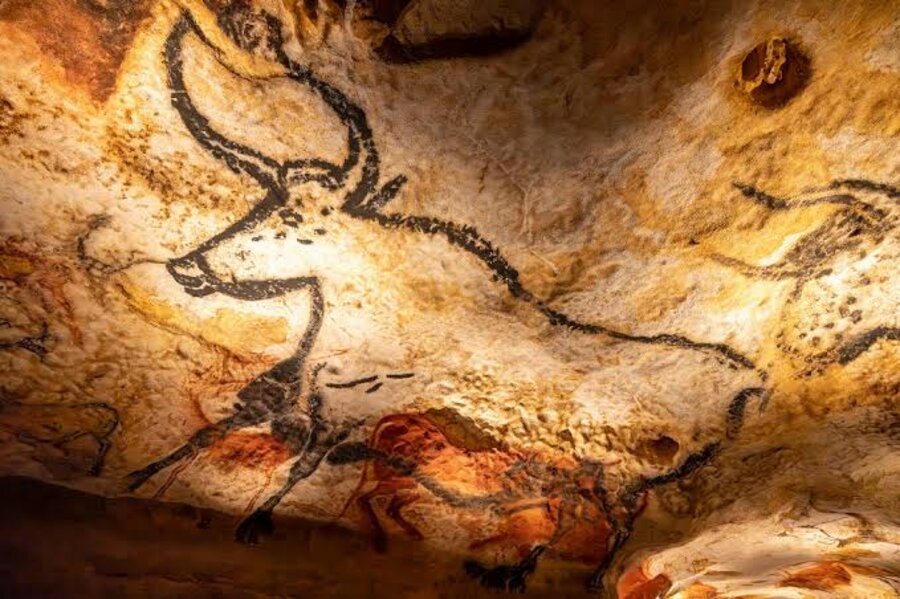
Lascaux and the first galleries
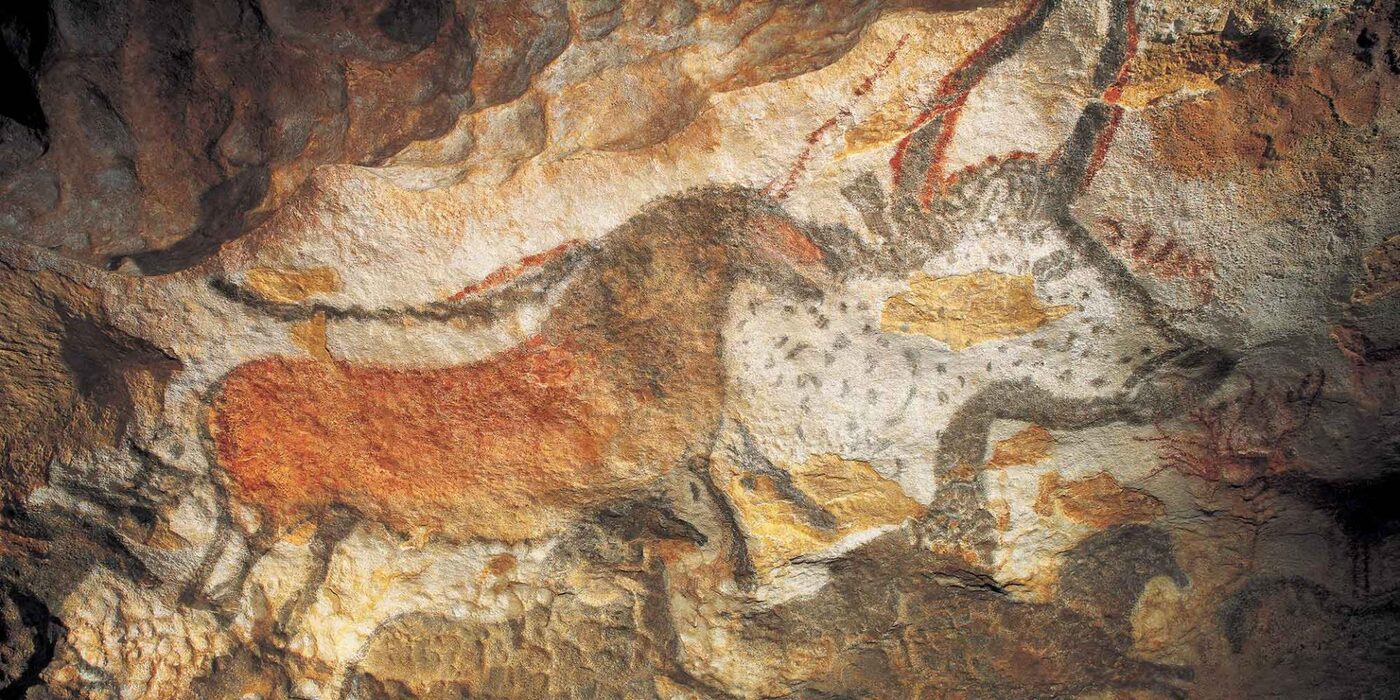
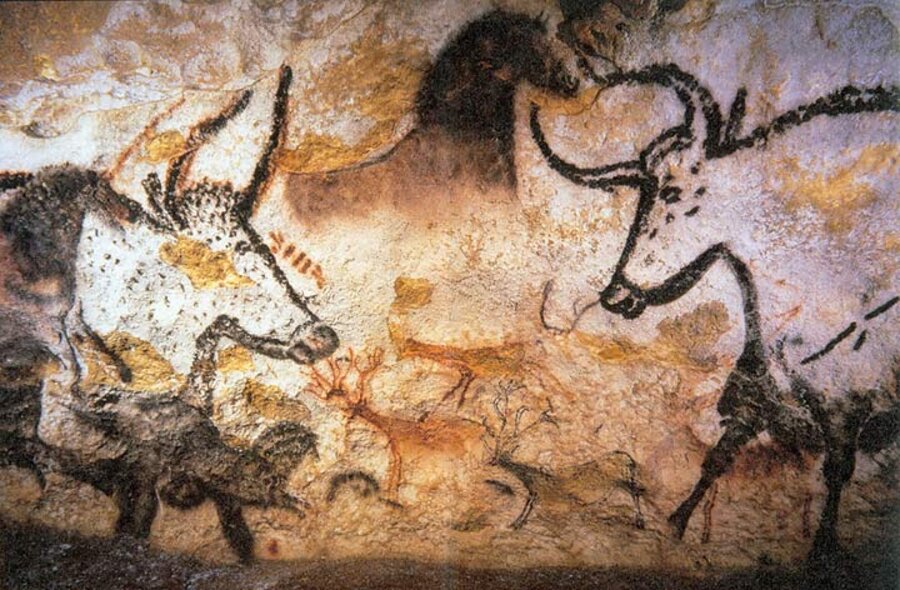
Long before museums, there were caves. The painted chambers at Lascaux, in southwestern France, hold hundreds of aurochs and bulls rendered in ochre and charcoal — some larger than a person is tall. No one knows exactly why they were made, only that the bull was worth painting first, and painting biggest.
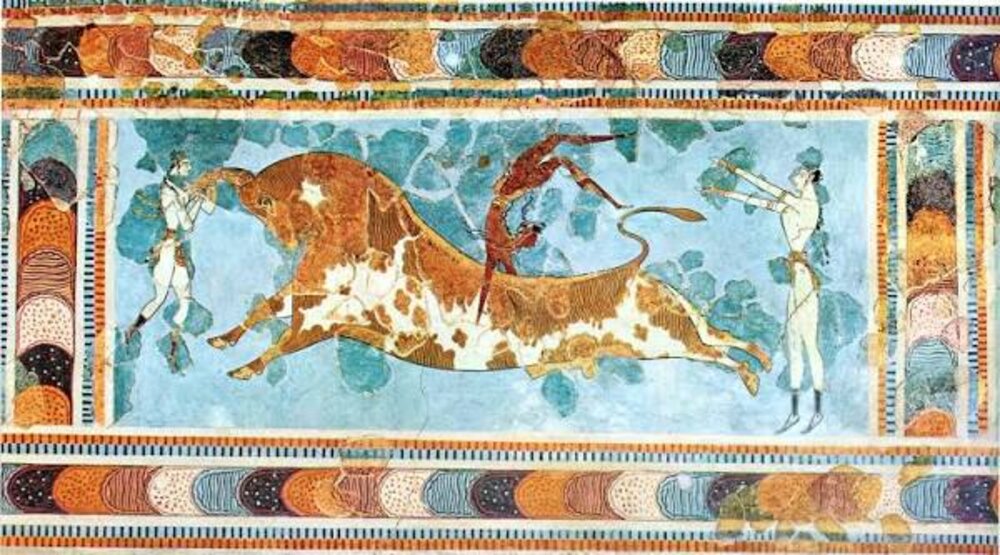
The bull-leapers of Knossos
On the walls of the Minoan palace at Knossos, painted athletes vault over the backs of charging bulls — an image repeated across frescoes, seals, and pottery for centuries. The bull here is not only feared but performed with: a ritual danced on the edge of danger.
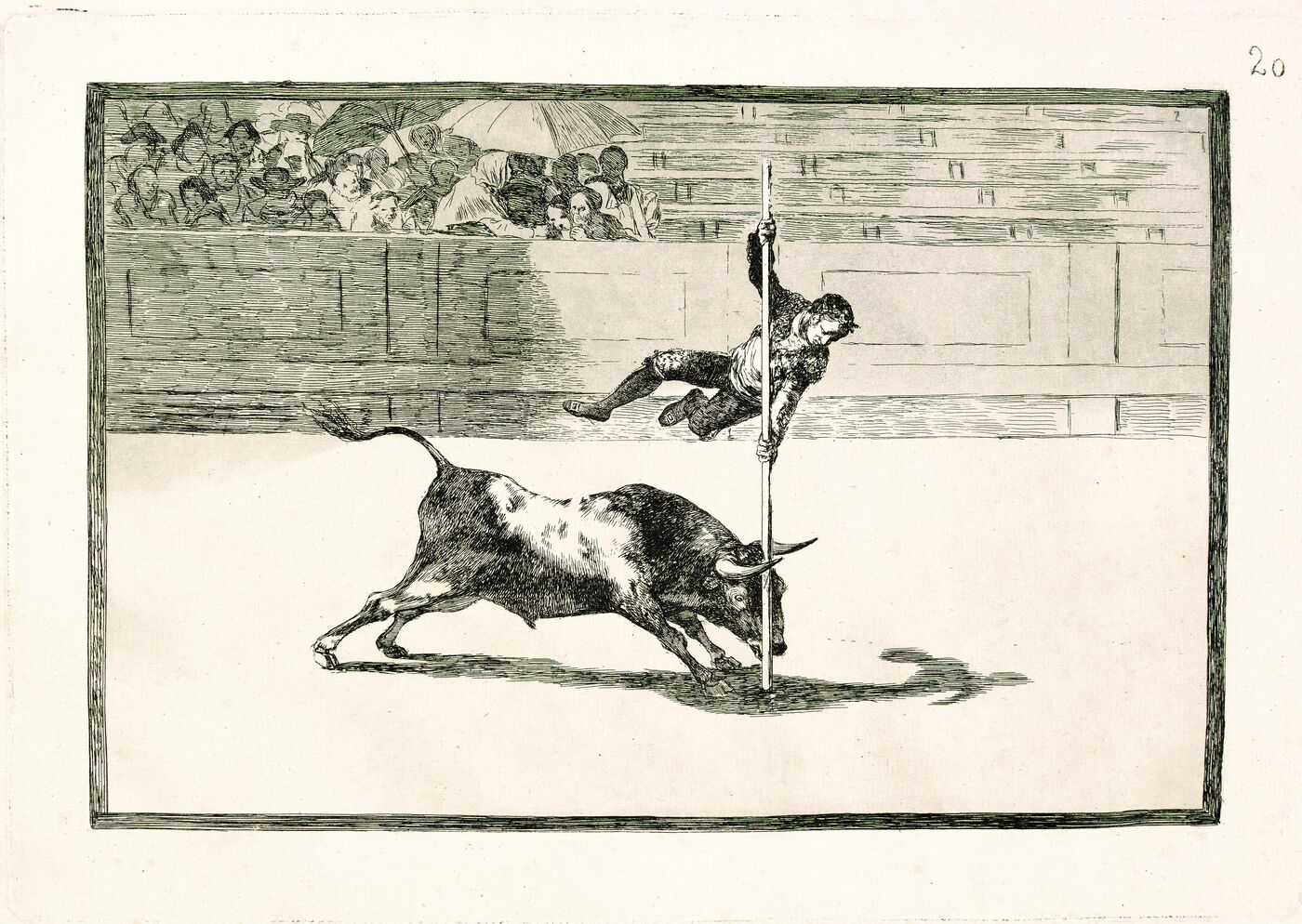
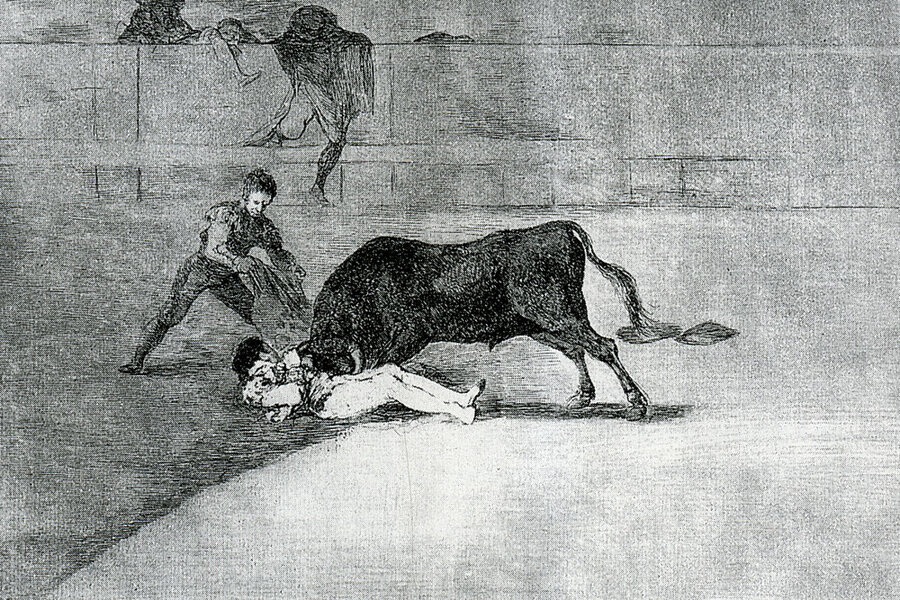
Tauromaquia and the bullring
Spanish printmaking turned the bullring into a subject in its own right — most famously in Goya's etched series on the corrida, depicting the bull as both adversary and tragic figure. The imagery set a visual vocabulary of drama and confrontation that later artists would return to again and again.
From Guernica to the lithograph series
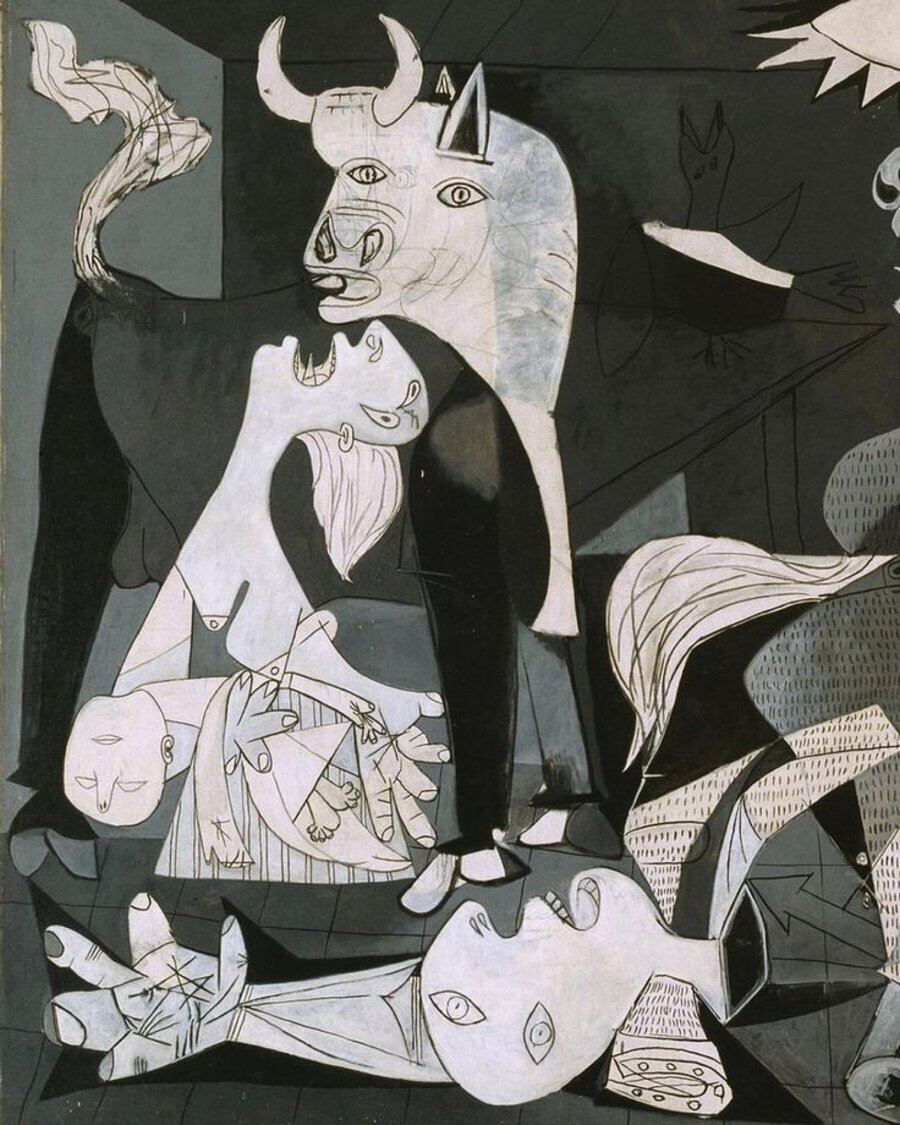
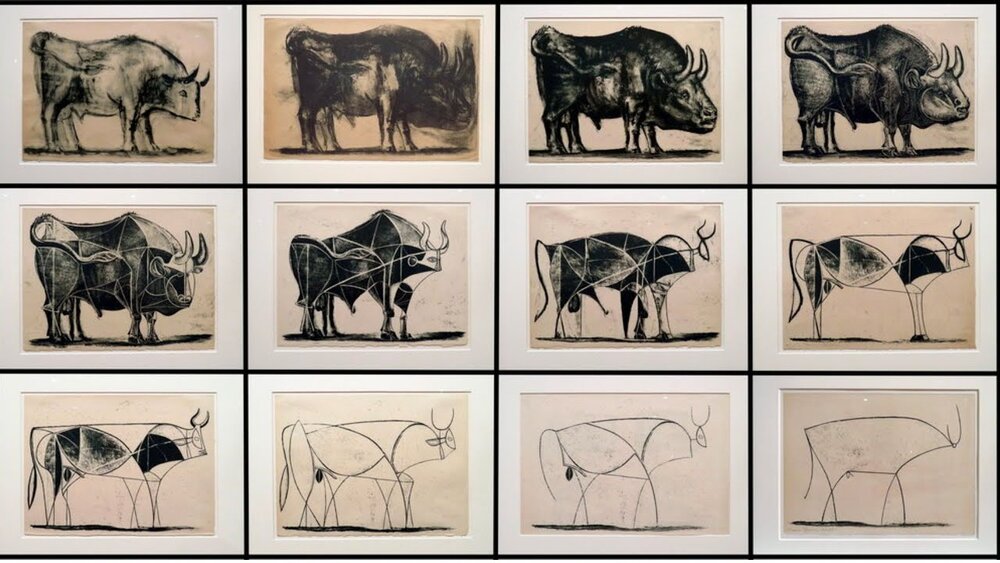
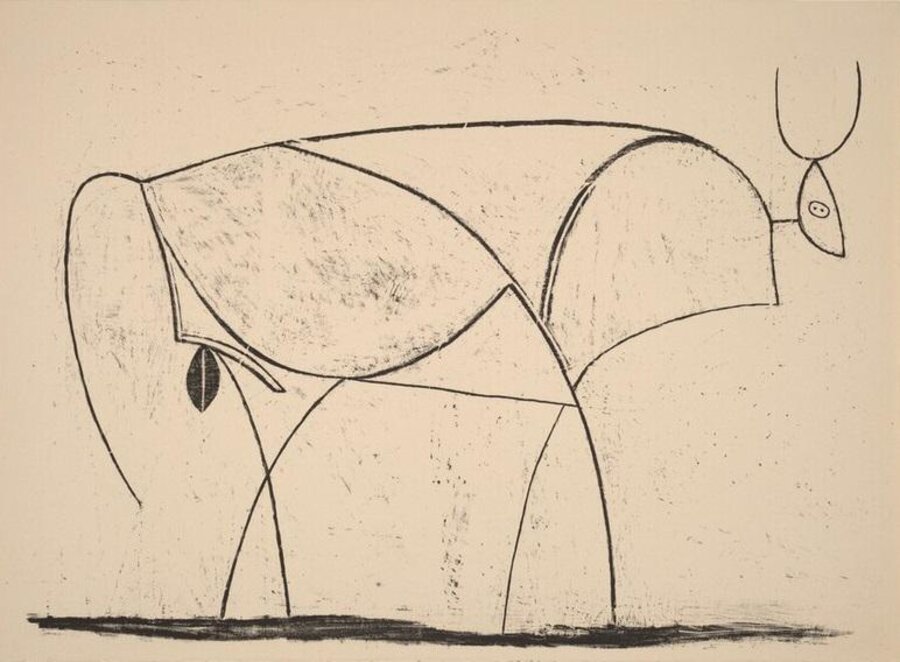
No modern artist returned to the bull more deliberately than Picasso. It appears wounded and screaming in Guernica, his 1937 response to the bombing of a Basque town, and again a decade later in his eleven-plate lithograph sequence, where a single bull is reduced, print by print, from a fully modeled animal down to a dozen essential lines. That progression — realism distilled to gesture — is the closest artistic ancestor to what happens in this museum's own daily sessions.
Across seventeen thousand years, the bull has never really left art — it has only changed hands, from the first painters working by torchlight to the printmakers and painters of the twentieth century. Few figures carry that much continuous weight. The Black Bull Museum exists to keep that continuity going: to give this generation of artists the same subject, the same license to reduce it, reinvent it, and make it theirs, and to preserve what they make of it for whoever comes looking, centuries from now.
The internet's folk art.
For most of history, art made for and by ordinary people — folk tales, religious icons, political caricature — wasn't sanctioned by any institution. It just circulated. Memes are the modern version: fast, disposable, endlessly remixed, made by anyone with an opinion and a few minutes. They're also, more often than people admit, genuinely sharp — well-observed, well-timed, and occasionally as considered as anything hanging in a gallery.
Turning a meme into a real, carefully made piece of art does two things at once. It gives something usually forgotten in a day the kind of permanence a museum gives anything else. And because fine art borrows its techniques and formats from centuries of tradition, a meme rendered that way quietly puts the viewer in front of art history — whether they meant to go there or not. The joke is the hook. The art history is what's actually being taught. Seven examples below.
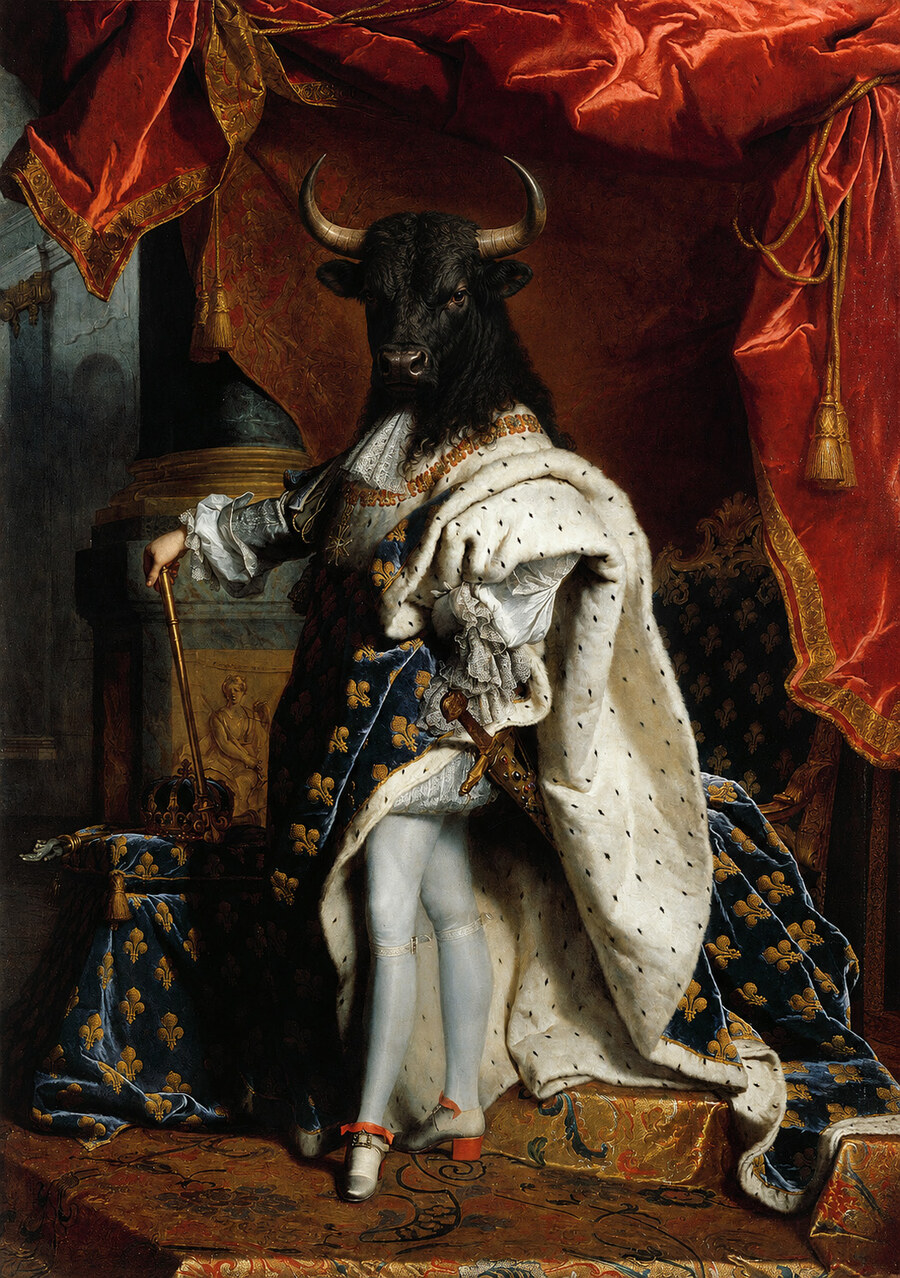
This piece reworks one of the most famous royal portraits ever painted — Rigaud's coronation portrait of Louis XIV, the defining image of French absolute monarchy — and replaces the king's head with a bull's. Anyone who knows the meme gets the joke instantly. Anyone who doesn't is looking, maybe for the first time, at the ermine-lined coronation robe, the fleur-de-lis, the staged authority of 18th-century French portraiture.
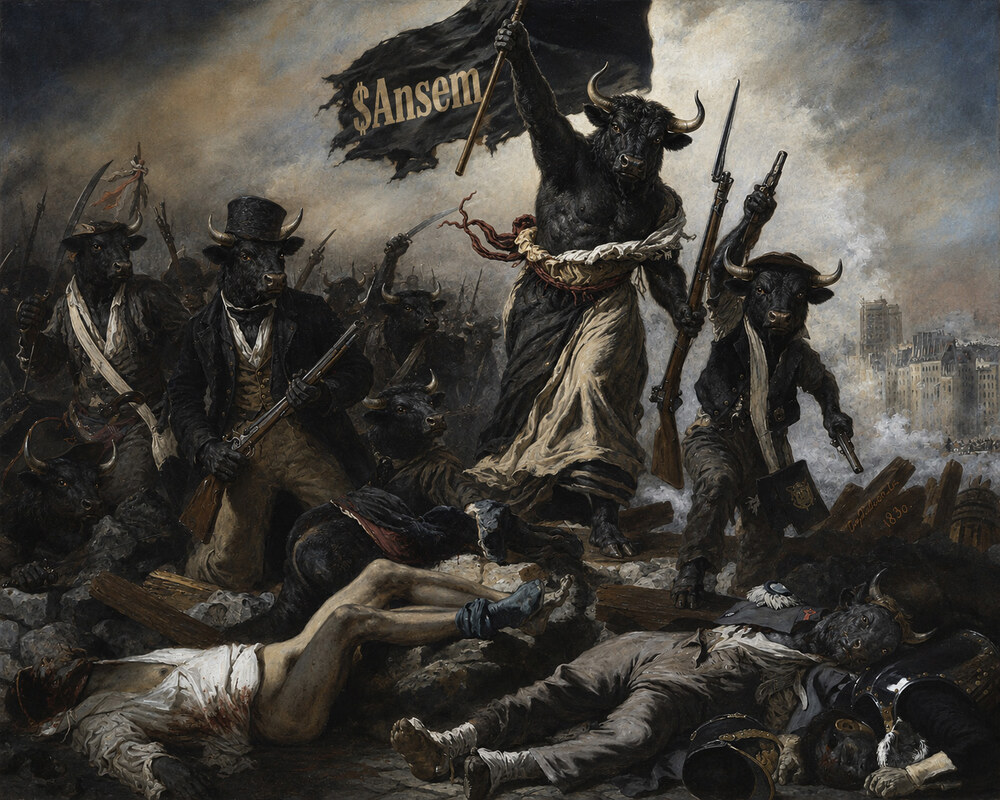
Delacroix's Liberty Leading the People is one of the most reproduced images of revolution in Western art — painted to commemorate the July Revolution of 1830. Here the figures are bulls, and the tricolor is a flag reading "$Ansem." The composition, the lighting, the fallen figures in the foreground — all of it lifted faithfully from a painting most viewers have seen without ever learning its name.
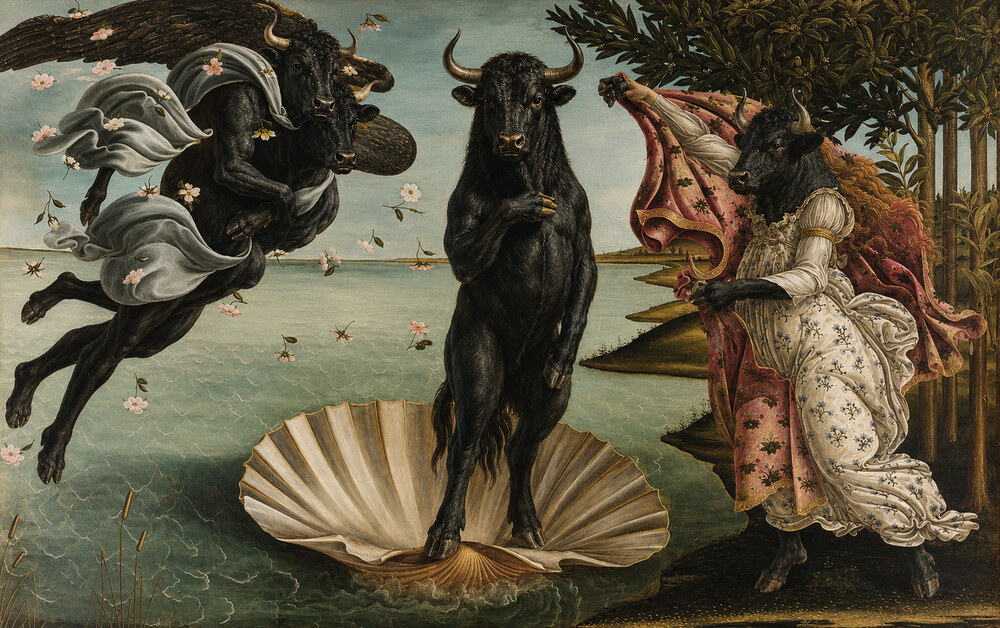
Botticelli's The Birth of Venus is one of the most recognized paintings in Western art — Venus emerging on a shell, flanked by the winds and an attendant. Here every figure is a bull, standing in for Venus herself. The shell, the flowing drapery, the flower-strewn wind — all preserved. Only the subject has changed.
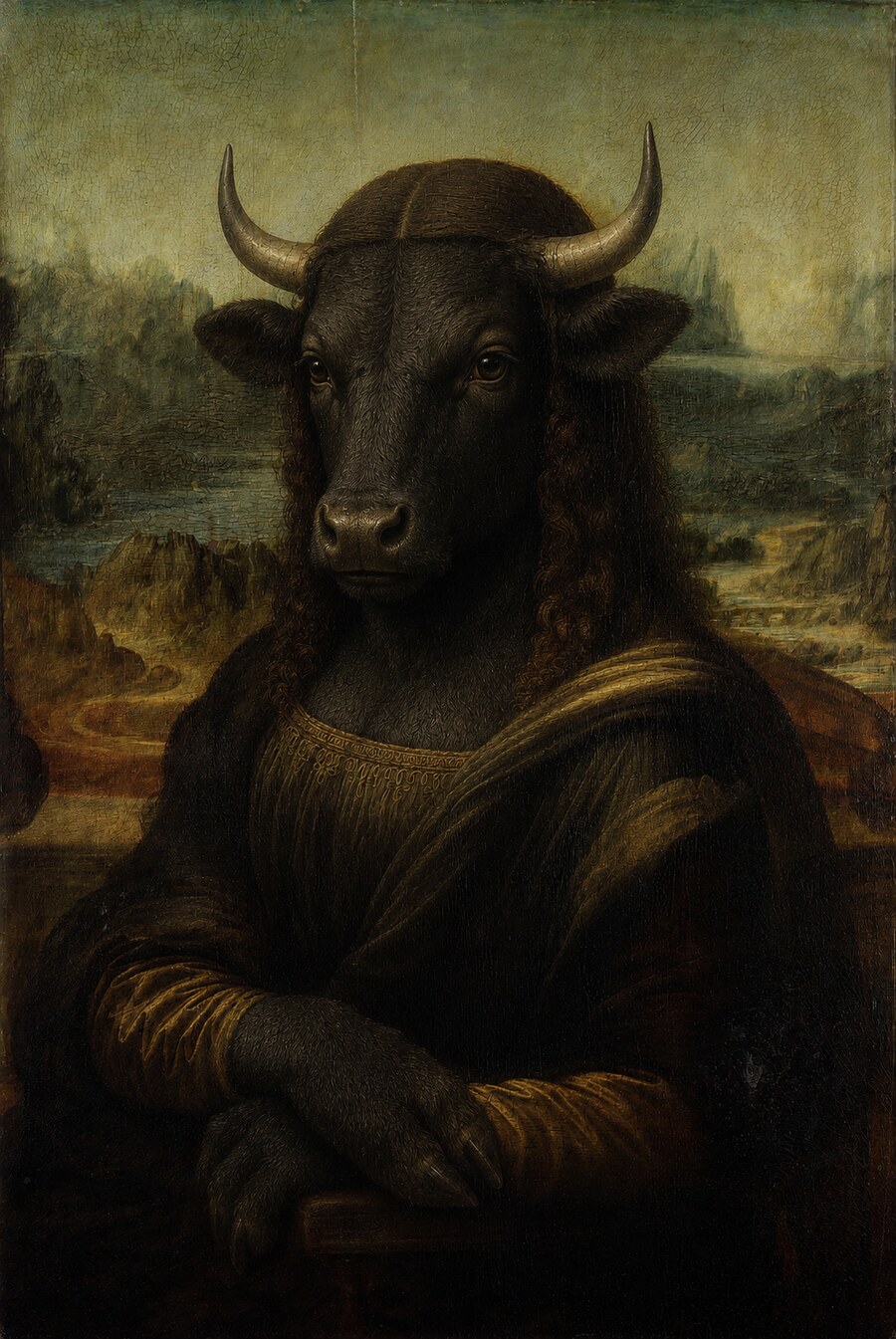
Arguably the most recognized portrait on Earth, reduced to its essentials: the folded hands, the hazy landscape, the direct gaze. Swapping in a bull's head does nothing to the composition and everything to the reading — the calm, appraising stare of da Vinci's sitter translates almost too well onto an animal known for exactly that expression.
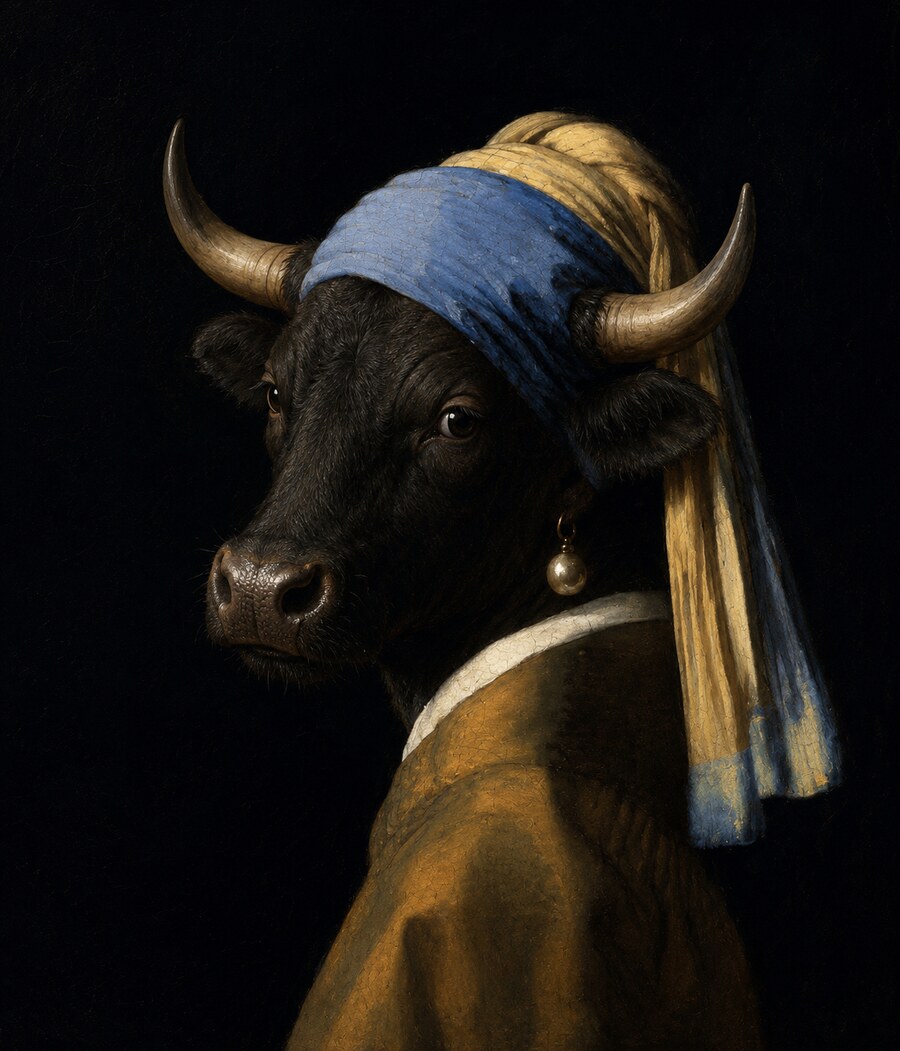
Vermeer's original is prized for its light — the way it catches the pearl, the turban, the parted lips. Here that same lighting falls on a bull instead, and the piece works precisely because nothing about the technique changed. Only the sitter did.
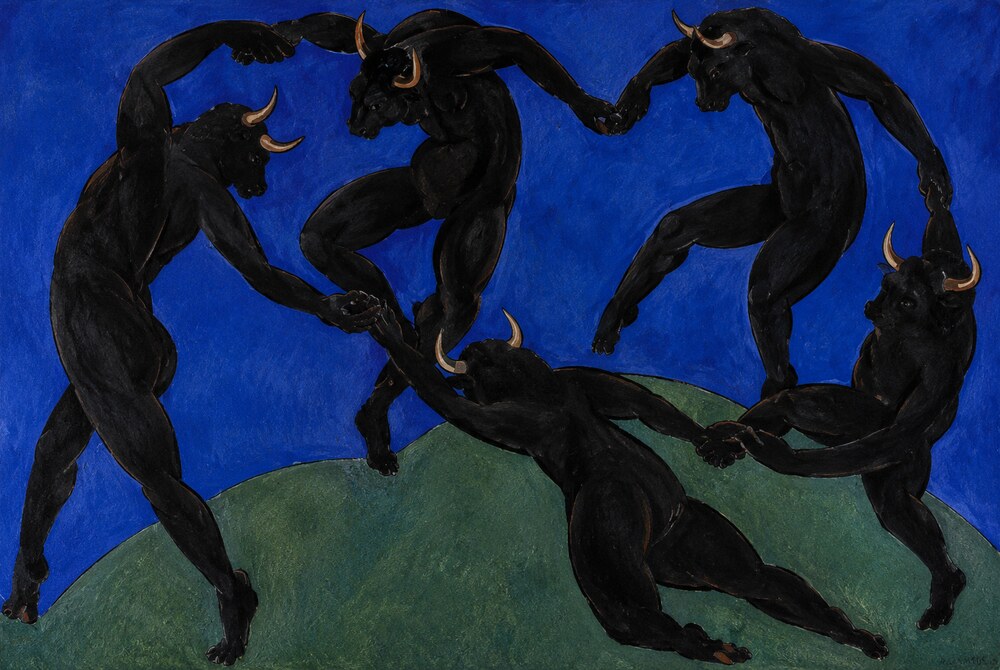
Matisse's Dance reduced the human figure to five red silhouettes in motion — bold color, almost no detail, pure rhythm. Swapping in bulls barely disrupts the composition at all, which says something about how little the original ever depended on the figures being human in the first place.
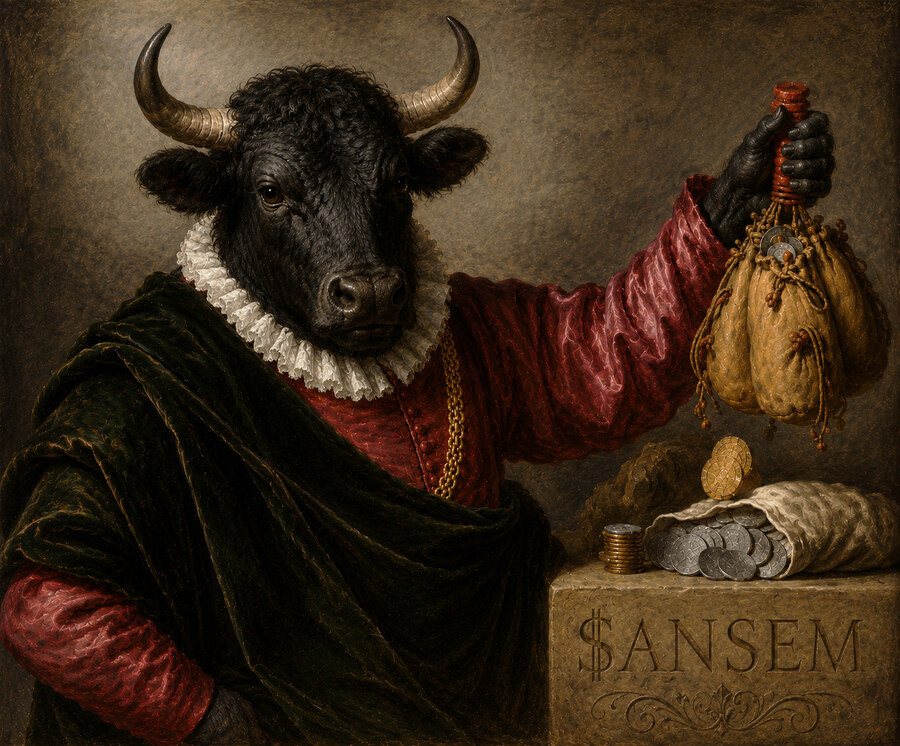
Not a reworking of one specific painting, but of a whole genre — the 17th-century merchant portrait, painted to project wealth and quiet authority. The ruff collar, the velvet, the coin bags: all standard iconography for the form. The inscription is the only thing that gives it away.
The 1,000 Genesis Bull Collection.
I'll be sketching all 1,000 Genesis Bulls myself, with select sessions streamed live on pump.fun. I'll use whatever medium feels right for each piece — ink, charcoal, paint, digital, or anything else that fits the moment. When the collection is complete, the full set will be airdropped to $BBM and $ANSEM holders. This isn't another cartoon PFP collection — the goal is for every piece to hold up as fine art in its own right. This Genesis collection is mine alone — the separate, weekly-curated meme editions by other artists (see Artists below) form their own collection entirely.
To qualify for the airdrop, a wallet must hold at least $10 worth of $BBM and $10 worth of $ANSEM at the same time. This minimum exists to prevent dust wallets from farming the airdrop unfairly.
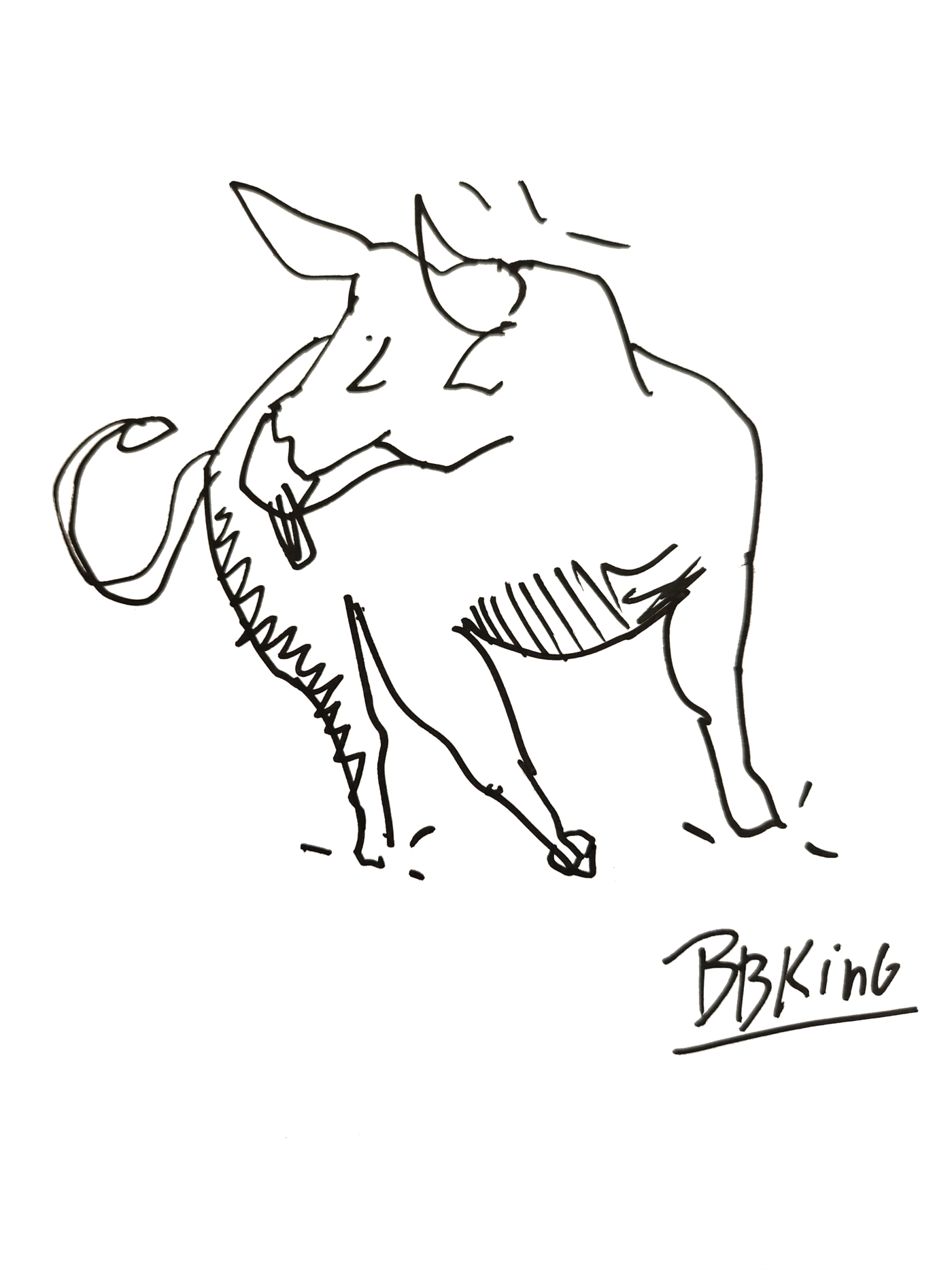
A selection from the Genesis 1,000.
Each of the 1,000 genesis bulls is numbered, catalogued, and drawn in a single live session. A rotating selection from the growing archive.
The hands behind the archive.
No artists are on board yet — for now, I'm creating the full 1,000 Genesis Bulls collection myself. Once underway, the plan is to curate one meme a week, made by a real meme artist, with their permission and payment — and turn it into a fine art edition. That collection is its own thing, distinct from the Genesis Bulls — also airdropped to $BBM and $ANSEM holders.
Are you a meme artist, or know one who'd be a good fit?
Submissions and curation happen through our X account. Every meme we curate is licensed directly from its creator and paid for — nothing gets used without permission. Reach out with your work, or point us to someone whose work you think belongs here.
@blackbullmuseum on X →The weekly drops.
Each week, one meme, by one real meme artist — licensed, paid, and turned into a fine art edition. This is where they'll live.
Nothing curated yet. The first weekly edition goes live once the museum's foundations — the Genesis 1,000, the treasury, the process — are solid enough to build on.
Follow @blackbullmuseum on X for the announcement →Infrastructure, not the point.
The Black Bull Museum Token, $BBM, funds the museum's treasury — the pool that pays artists, purchases work for the permanent collection, and keeps the archive running. Holding it is a way of supporting the museum directly, the same way a membership supports any cultural institution.
It is not required to view the collection, and the museum's purpose does not change based on its price. The art, the archive, and the artists are the lasting part — the token is simply how the community funds them.
Two features are under consideration for the road ahead: a burn-to-redeem mechanism, letting $BBM and $ANSEM holders burn tokens in exchange for special edition artworks from the collection, and a voting system for $BBM holders to help shape which artists and works the museum curates. Neither is live yet — both will be announced here if and when they are.
View on pump.fun12% of the total $BBM supply is reserved for the museum — used for airdrops, onboarding new holders, and a portion set aside for $ANSEM, should Ansem come on board.
We're deliberately not offering a majority stake — the 60%+ some tokens hand their namesake. If a $BBM voting system for curation goes live, putting that much voting power in one wallet works against the whole point of the experiment. We want everyone curating, not one person.
Contract address and treasury figures will be published here once finalized. Always verify the address directly on pump.fun before transacting.
Nothing on this page is financial advice. $BBM is a speculative digital asset; its value can go up or down, and it may lose all value. Do your own research before buying, holding, or transacting in any capacity.